Senior capstone · in progress
Flexible Micro-Supercapacitors
- Problem
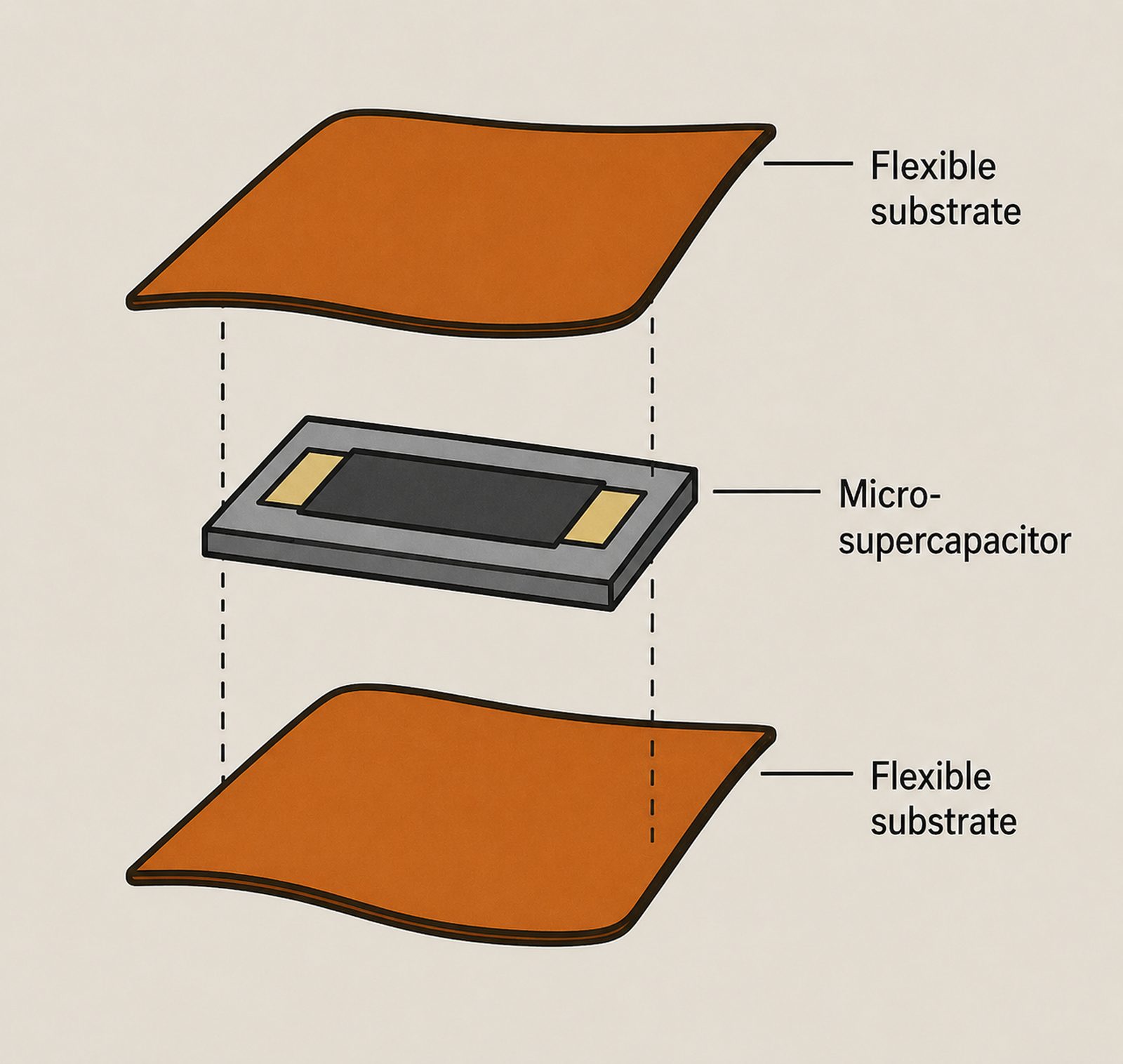
- Make a micro-scale, mechanically flexible supercapacitor for wearable and implantable devices.
- Date
- Spring 2026 – Spring 2027
- Team
- Team 13 "Micro Charge": 6 students; advisor Prof. Yung Joon Jung
- My role
- Technical lead (team charter): check calculations and verify designs
- Status
- Research and design done; nothing fabricated yet. Fabrication and testing in Capstone 2
Problem
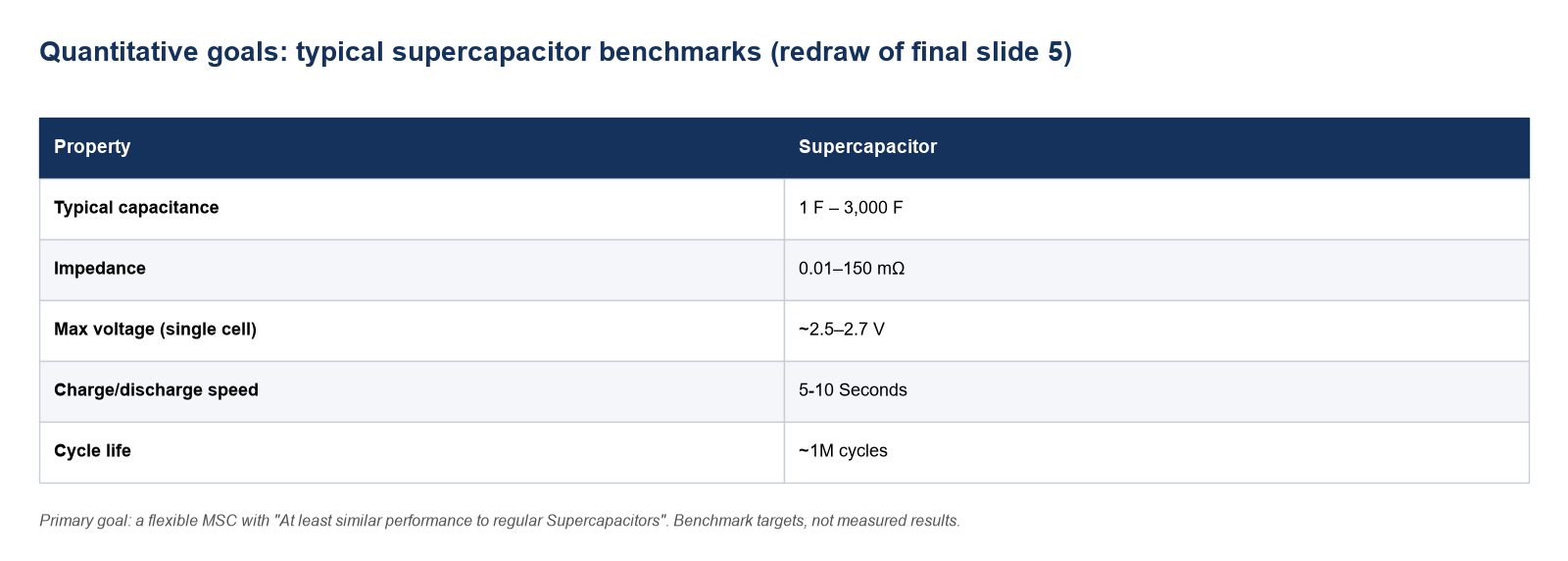
- Supercapacitors charge almost instantly and store far more energy than ordinary capacitors, but they are bulky and rigid. A micro-scale, flexible version could power implantable, wearable and compact devices.
- Example use case: a smaller, flexible continuous glucose monitor patch. Current monitors are rigid and roughly the size of a walnut.
My role
- Technical lead, as defined in the team charter: responsible for checking calculations and verifying that designs are valid.
- As technical lead, I assigned two teammates to cleanroom and dip-coating training so they can fabricate the prototypes. I do not do cleanroom work myself.
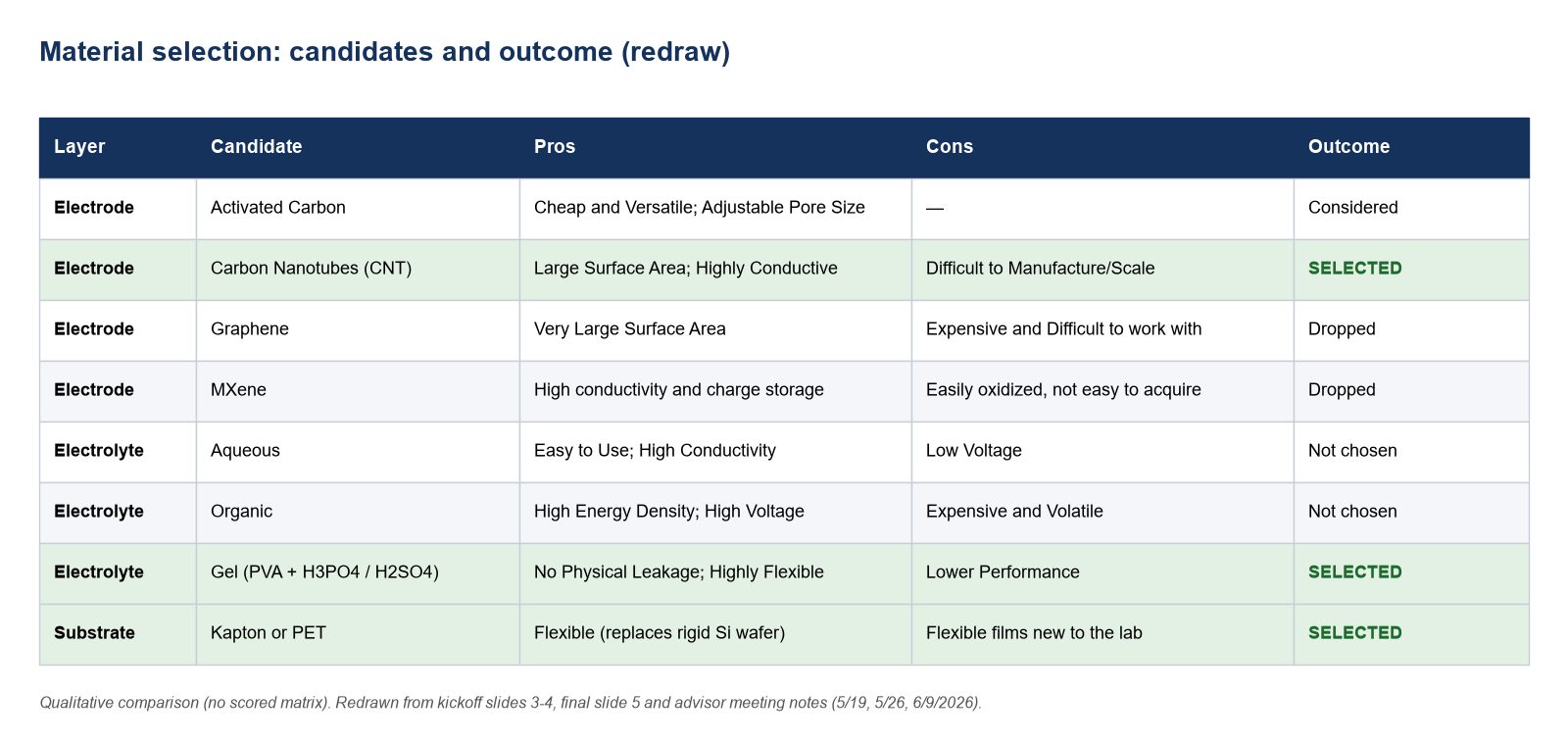
- My research topic: which materials are used in supercapacitors today, and why (activated-carbon pore size, carbon nanotubes, graphene, MXene, and aqueous, organic and gel electrolytes).
Material selection
- Compared electrode, electrolyte and substrate candidates on surface area, conductivity, flexibility, leakage, cost and ease of getting them, then discussed them with the advisor.
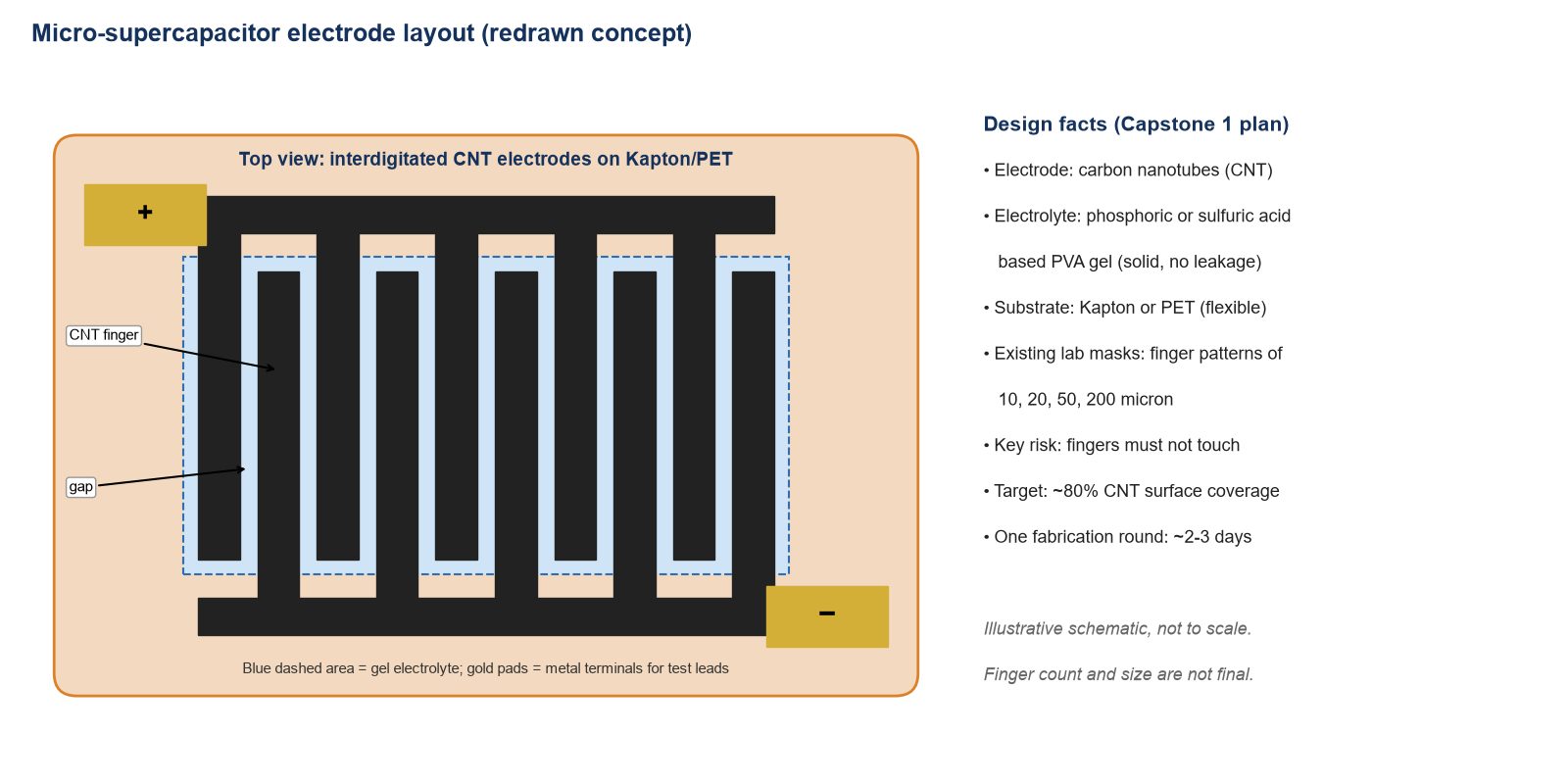
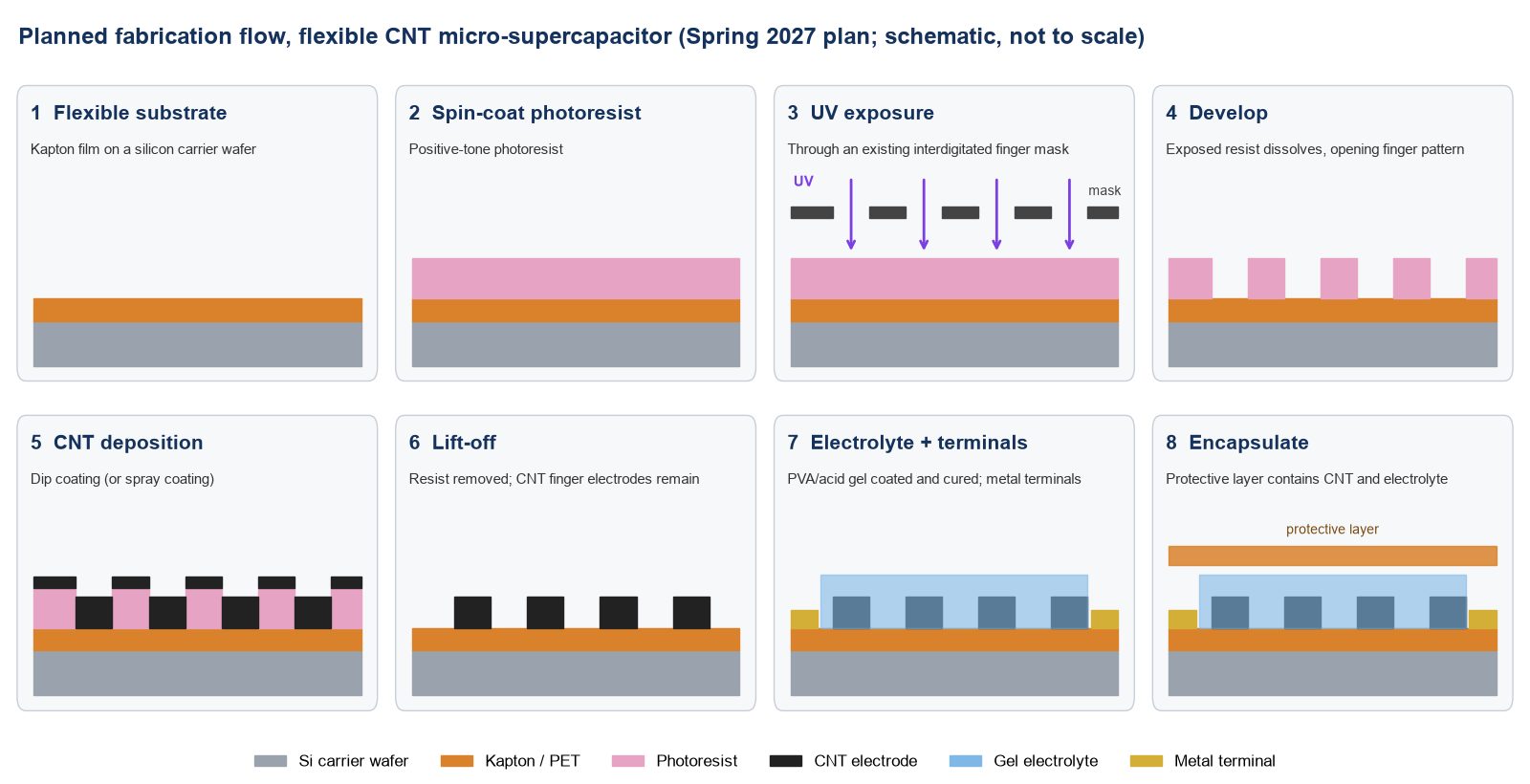
- Selected design: carbon-nanotube (CNT) electrodes, a PVA gel electrolyte based on phosphoric or sulfuric acid, and a Kapton or PET film as the flexible substrate.
- MXene was dropped: it is easily oxidized and hard to get. A solid gel electrolyte was chosen so nothing can leak.
Planned process
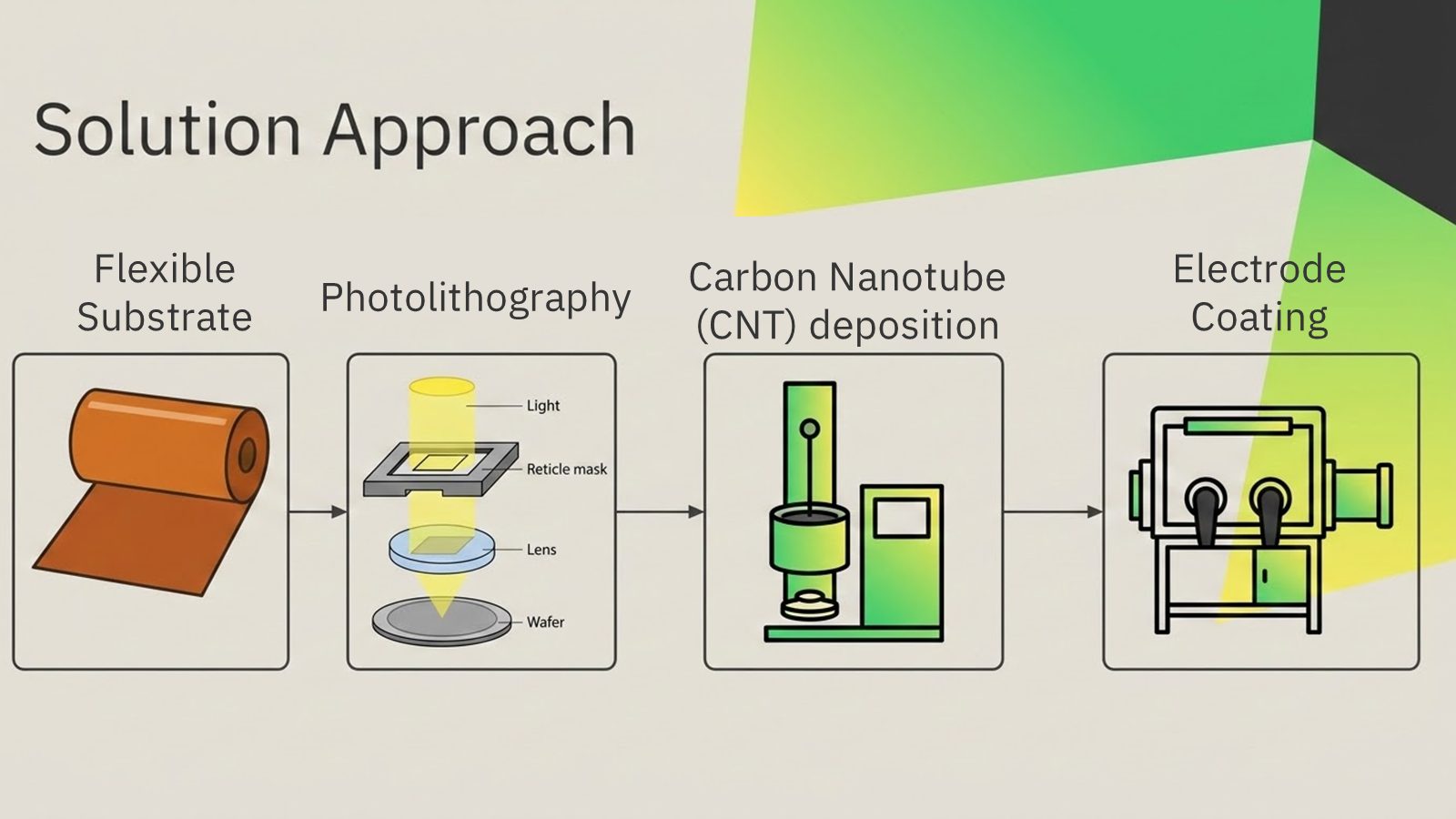
- Kapton on a silicon carrier wafer → positive photoresist → UV exposure through the lab's existing interdigitated finger masks (10, 20, 50 and 200 µm) → CNT dip or spray coating → lift-off → gel electrolyte and metal terminals → protective encapsulation.
- Planned tests: cyclic voltammetry, galvanostatic charge/discharge and impedance spectroscopy, microscope checks for short circuits, and bending fatigue.
Ethics: chemical leakage
- I wrote the ethical-issues section of the team's Ethics and Impact memo. I named preventing chemical leakage as the top safety duty for a device worn on or in the body.
- This supports the solid gel electrolyte and the protective encapsulation layer in the design.
Timeline
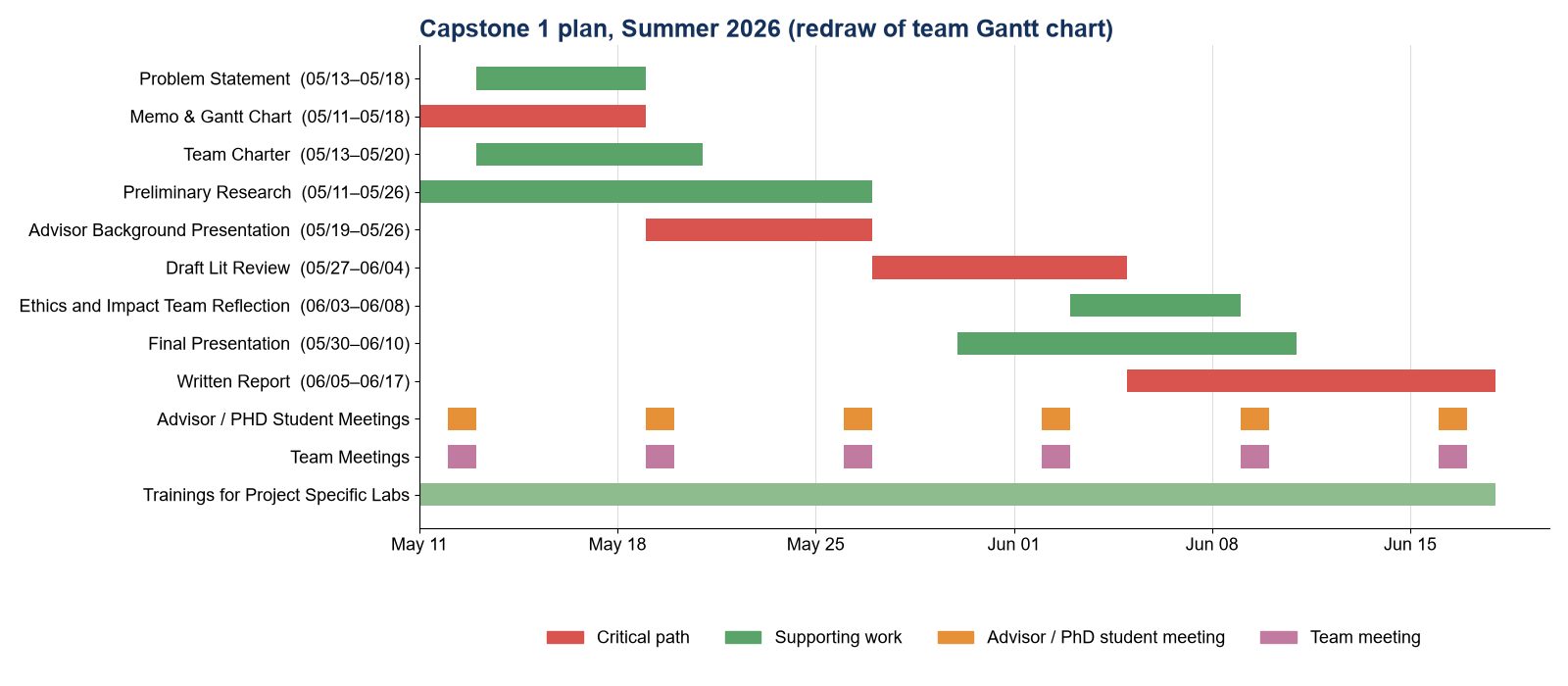
- Capstone 1 (May–Jun 2026, done): problem statement, team charter, literature research, advisor presentation, Ethics and Impact memo, and final presentation.
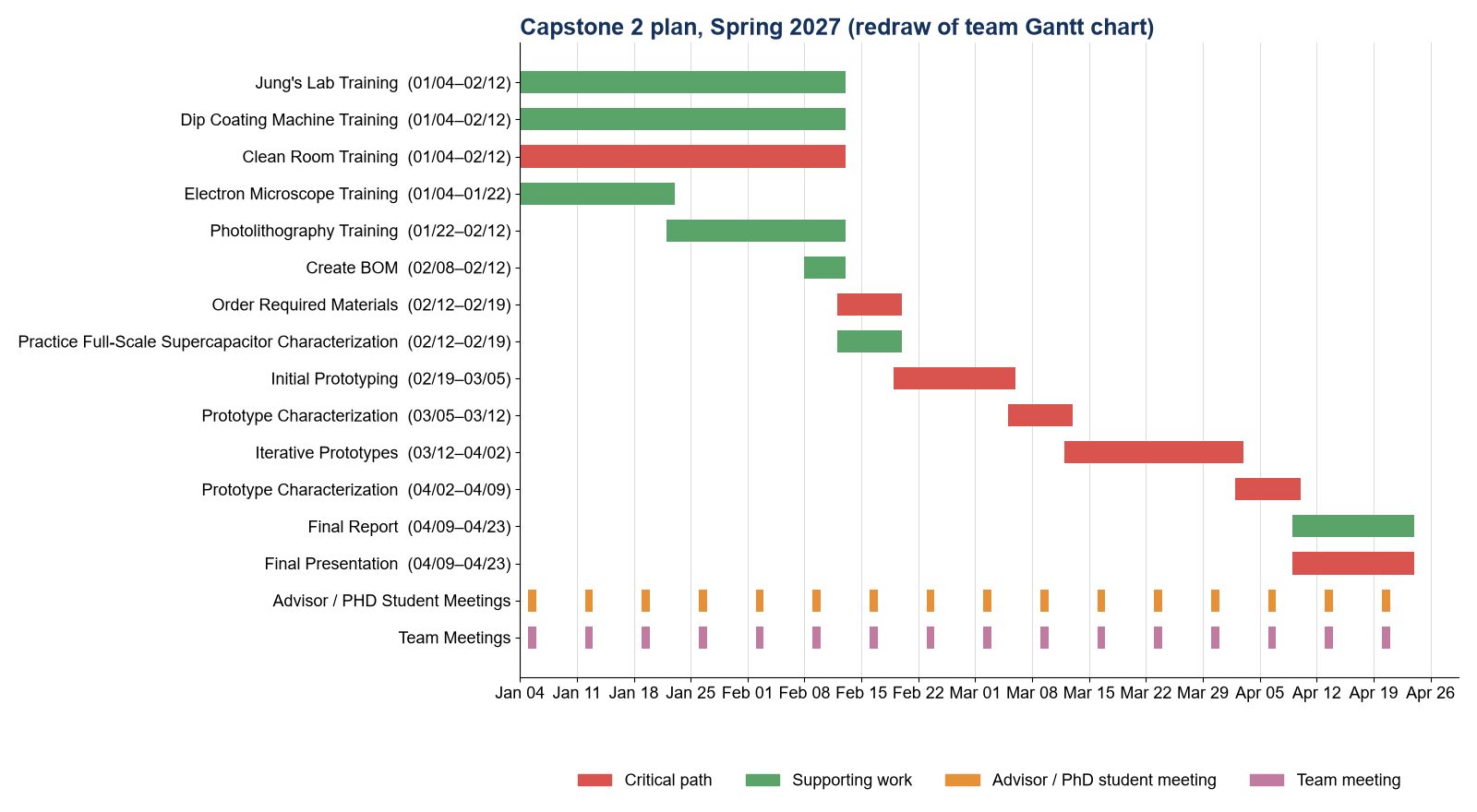
- Capstone 2 (Jan–Apr 2027, planned): lab, cleanroom, dip-coating and photolithography training; BOM and material orders; initial prototype; characterization; iterative prototypes; final report and presentation.
- This page will be updated when there are test results.